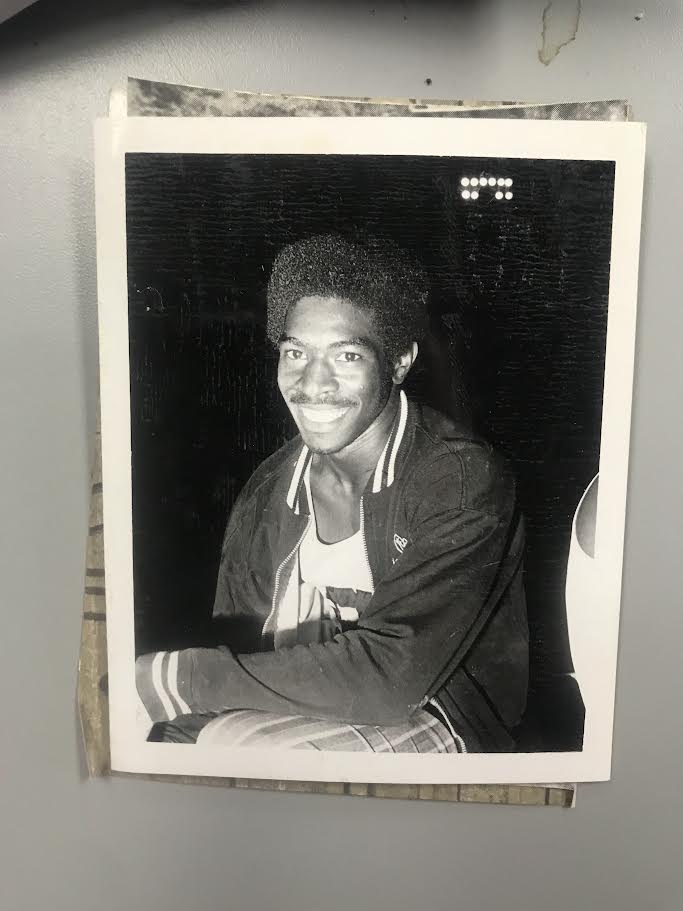
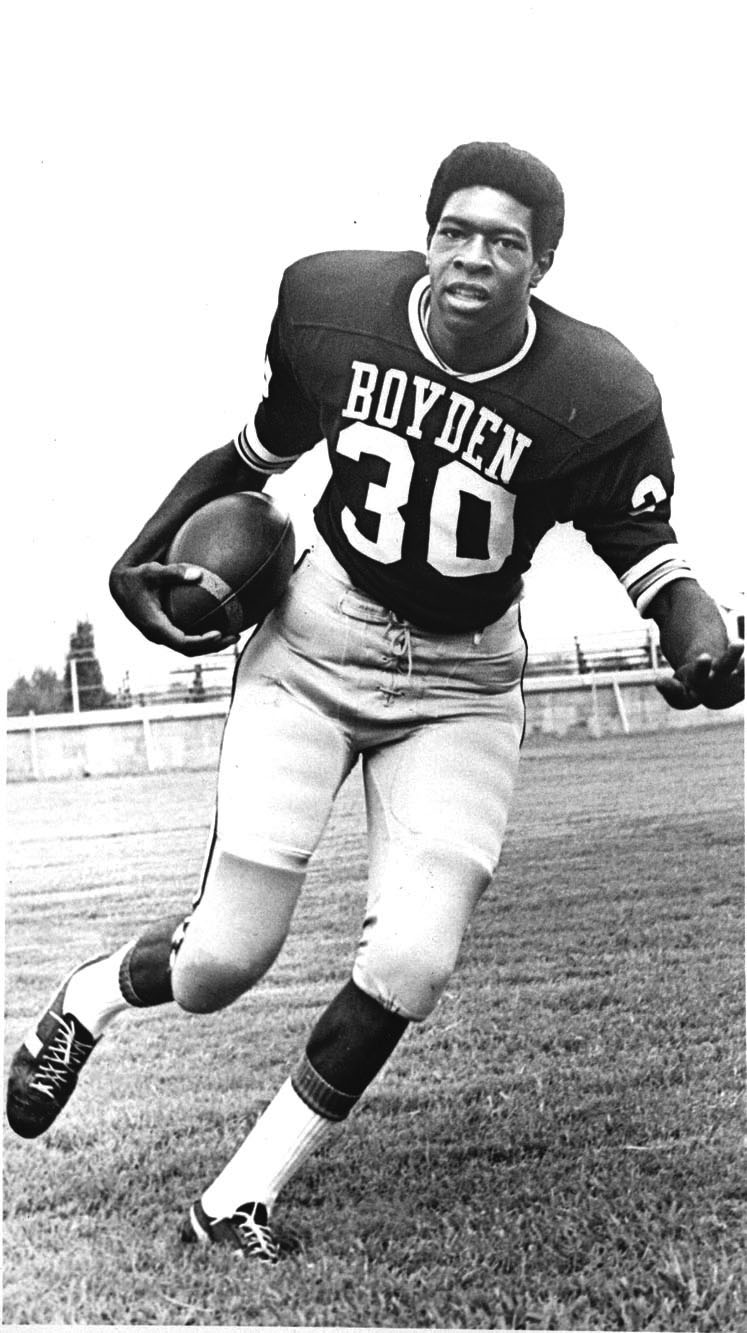
Roger Jackson.
By Mike London
Salisbury Post
SALISBURY — Roger Jackson, known as the king of the hurdles, passed away on Wednesday.
Jackson, 73, was part of the Boyden High Class of 1971. The school would become officially known as Salisbury High before the 1971-72 school year.
Jackson could sprint and jump with the best. He was born for the hurdles. He had the athletic gifts to excel and he had the competitive spirit to go with it. He was going to beat whoever lined up next to him, no matter how swiftly he had to move.
In the spring of 1971, Boyden had such a dominant track and field team that the athletes wanted to test themselves against the fiercest competition available. That meant entering the Duke-Durham Relays, a massive meet that attracted top athletes from not only North Carolina, but from South Carolina, Tennessee and Virginia. The Boyden athletes entered the meet on their own, without approval of coaches and administration, because the schedule already was packed tight. They broke some rules and bent some more, but they got entered in the meet.
The Boyden boys competed in the Metrolina Relays, a major meet in Charlotte, the night before the Duke-Durham Relays. That one was on the schedule. They finished second to the powerful Myers Park team that would win the NCHSAA’s 4A championship not long after that.
After a couple of hours of sleep the Saturday morning after a long night in Charlotte, 15 boys, roughly half of the Boyden team, piled into family vehicles for the adventure of a lifetime. No buses, no coaches. At 7 a.m., they headed to Duke for a 10 a.m. meet start. They were crazy, but they were confident. They had Jackson in the hurdles, Kenny Holt in the high jump, Robert Pulliam in the throws, and terrific sprinters such as Aubrey Childers and Terry Beattie.
There were only two divisions in the Duke-Durham Relays — large schools (more than 1,000 students) and small schools (less than 1,000). Functioning mostly on pure adrenaline, Boyden won the small school division, edging Hargrave Military Academy with 41 points and tying for the most points with large school champion (Dobyns-Bennett, Kingsport, Tenn.).
Boyden accumulated most of its points in the relays. Boyden also got 10 points from Jackson in the 120 high hurdles. He ran 14.2, breaking the meet record. He held that record very briefly. Competing in the large school division, Charles Foster from Gaffney, S.C., ran a stunning 13.7. Three years later, Foster was the No. 1-ranked hurdler in the world. He competed for the USA in the 1976 Summer Olympics.
The Boyden athletes came back from Durham in triumph, their impossible mission successfully completed, with two large trophies in hand, plus sweatshirts. Fortunately, no one was injured on their unauthorized quest, and when Boyden returned to its normal schedule, it wiped out the competition in every meet, winning the second of what would be three consecutive championships in the Western North Carolina High School Activities Association for coach Pete Stout. Stout was best known as the school’s head football coach, but he insisted that all football players not playing baseball come out for track and field every spring.
Besides his multi-state victory in the Duke-Durham Relays and state titles in Junior Olympics, Jackson would win five individual hurdling championships in the WNCHSAA.
He won the 120 high hurdles in 1970 in a meet-record time of 14.9 seconds. When he won the event in 1971, he broke his own record, running 14.6.
Jackson won the 180-yard low hurdles three times, in 1969, 1970 and 1971. He tied the meet record of 20.2 seconds in 1971.
Jackson also competed for Boyden relay winners in the WNCHSAA Championships all three years. Jackson, Gary Powers, Childers and Beattie won the 880-yard relay in 1971. Jackson, Powers, Childers and John Hanford won the 880 relay in 1970. In 1969, Dennis Brisson, Childers, Powers and Jackson won the mile relay.
In 1970, Jackson was named the WNCHSAA Meet’s Most Outstanding Performer.
That makes eight WNCHSAA championships for Jackson.
As tremendous as Jackson was on the track, a lot of people remember him for football, a sport in which he was an explosive halfback for the Hornets.
Jackson’s career football stats won’t overwhelm people because they were compiled in an intensely competitive era in which six or seven teams in the South Piedmont Conference were going to be tough in a given year. The coaches in charge in the SPC were primarily conservative, ball-control, defensive-minded men and a 24-7 victory on a Friday night in the SPC was considered a satisfying romp.
Holt, who quarterbacked Boyden in 1970, had to be one of the most athletic quarterbacks the program ever has had. He threw four touchdown passes that entire season. That’s just one example of the stats from that era. Teams didn’t throw unless they had to. Boyden usually didn’t have to.
In the fall of 1968 when Jackson was a sophomore, Boyden had senior Derrick Anderson and Childers to run the ball, so Jackson was employed as a 150-pound defensive back. He tied for the team lead with three interceptions. Boyden battled to scoreless ties in back-to-back weeks against Statesville and A.L. Brown, went 6-2-2 and didn’t make the WNCHSAA playoffs.
In 1969, Jackson got his first chance to shine on offense and had an All-SPC season. He was honored as Boyden’s Most Improved Player. He emerged as a serious threat as a pass-catcher that season as Holt and David Garwood shared quarterbacking duties. Jackson was the team’s leading receiver with 19 catches for 415 yards and six touchdowns. He scored 16 touchdowns that season. He had a four-TD game against A.L. Brown at a time when four-TD games were front-page news. Boyden went 8-2 that season but losses to Concord and Lexington kept Jackson and his teammates out of the playoffs.
Jackson would have his second four-TD game late in the 1970 season. It was one of the most anticipated games in county history. SPC champ Boyden against North Piedmont Conference champ East Rowan in a WNCHSAA playoff game at Catawba College. East didn’t have the airtight defense it had in 1969, but W.A, Cline still had a strong team that had not lost a game on the field for a long time. East had gone 13-0 in 1969, with super wins against Concord and Shelby.
In 1970, the Mustangs had tied North Rowan in their regular-season meeting and had forfeited their win against South Rowan, so they were officially 9-1-1 when they squared off with Boyden. Boyden came into that epic game 10-0-2. The blemishes were mid-season ties against Lexington and North Rowan.
East struck first in the showdown, a pass play from the famed duo of CM Yates to Johnny Yarbrough.
East’s ensuing kickoff sailed deep to Jackson, and his 60-yard return, a momentum-changer early, was one of the key plays in the game.
Boyden led 33-7 before the Mustangs scored again. Yates and Yarbrough connected two more times for touchdowns, but the final was 40-19. Jackson scored four touchdowns, rising to the occasion in the same manner that he did whenever he faced a serious challenge in the hurdles. Boyden’s season and Jackson’s high school football career ended the next week with a 13-7 loss to Shelby in the WNCHSAA championship game, but Boyden’s game with the Mustangs is still remembered as one of the classics in Rowan football history.
Jackson also helped Boyden some in basketball. He wasn’t a scorer, by any means, but on Bob Pharr-coached teams that valued defense, he made contributions off the bench to the 1968-69 and 1969-70 teams that won WNCHSAA championships. That 1969-70 team was 26-0.
Jackson was inducted into the Salisbury-Rowan Hall of Fame in 2025, and while the recognition was overdue, he and his family, which includes nephew Cal Hayes Jr. also a Hall of Famer, were appreciative that he had not been forgotten more than 50 years after his glory days.
Charles Busby, a champion pole vaulter for Boyden during Jackson’s glory years, remembered his talented teammate when he spoke about the 1971 Duke-Durham Relays odyssey a few years ago.
“Roger was arguably the most gifted athlete of many during those years,” he said. “He was a born hurdler who brought his game every time he stepped on the track. Roger wasn’t just a good bet to win — he was a lock.”
The king of the hurdles is at rest now, but his legacy will live on.





