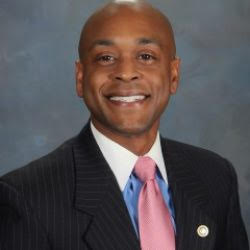
By Algenon Cash
Every two years, North Carolinians send lawmakers to Raleigh with one expectation at the top of the list: pass a state budget. It is the most fundamental responsibility of the General Assembly. The budget isn’t symbolic. It’s the operating blueprint for how the state pays its workers, funds education, supports health care providers, invests in infrastructure and prepares for the future. Without it, North Carolina’s entire system runs on old numbers, outdated assumptions, and a policy framework that no longer reflects current needs.
This year, that basic responsibility went unfinished. And that failure carries more weight than usual.
I’m not debating politics, but I care about public policy and good governance, about what’s at stake for working families, businesses and our local institutions. But there’s no way to ignore the political risk Republicans have taken by adjourning without a budget — especially at a time when national politics is already creating pressure points for their party.
Republicans took control of the General Assembly after spending years on the outside looking in. When they finally won the majority in 2011, they came in with a very clear promise to their base: tighten the books, run the state responsibly, and rebuild trust in government. A lot of voters supported them for exactly that reason — they believed Republicans would handle the budget with discipline and keep North Carolina on solid financial ground. And to their credit, Republicans often highlight North Carolina’s strong economic performance over the past decade as proof that they have managed the state well.
But when the legislature fails to pass a budget — not because of divided government, but because of internal disagreements — it directly undermines the very image of competence and stability that Republicans have spent years building.
This isn’t about blaming one chamber or the other. The House and Senate always disagree. That’s embedded in the process. But when those disagreements escalate to the point that the budget — the one thing that must get done — gets pushed aside, voters notice. Teachers notice. Health care providers notice. State employees notice. Business leaders notice. And they remember.
A delayed budget means teachers and state employees won’t see their promised raises. Hospitals and doctors are left with uncertainty about Medicaid rates at a time when rural providers are already under strain. Road improvements and construction projects stall. Universities delay capital expansions. Local governments pause decisions because they can’t forecast what the state is doing. These are not small inconveniences; they are real disruptions felt by voters in the state.
If Republicans want to keep the credibility they’ve built over the years, they can’t afford mistakes like this. North Carolina earned its reputation for being careful with money and steady through ups and downs, but reputations don’t maintain themselves. That reputation is an asset — but assets can be lost.
The irony is that what’s happening in Raleigh isn’t being forced by Democrats, the governor, or a divided legislature. It’s happening because Republicans, who control both chambers with large majorities, could not reach internal alignment on spending priorities and policy add-ons.
It’s one thing to disagree on policy. It’s another thing entirely to fail to execute on governing.
And execution is what voters value most.
Republicans are starting to look distracted by all the internal disputes, especially at a moment when voters just want to see competence and focus. If the party wants people to believe its message about stability and responsible leadership, it has to actually show that in real time — not just repeat it in talking points. Letting a session end without a budget sends the opposite message, and honestly, it’s the kind of unforced error that invites criticism.
North Carolinians deserve steady, honest governance no matter who’s in charge. Passing the budget shouldn’t be viewed as an achievement. It’s the baseline. It’s the minimum expectation. Everything else in state government depends on it — from education and health care to infrastructure and economic development. When it doesn’t happen, the entire system absorbs the consequences, not the politicians.
North Carolina has enormous potential, and the state’s growth over the next decade will depend on consistent execution. Republicans have made a strong case for their fiscal stewardship for years, but stewardship requires showing up and doing the work. This year, they didn’t finish the job.
They can correct that next session. And for the sake of the state, they should.





